Unmasking the DMV Traffic Ticket Text Scam: The Deceptive Texas Code 15C-16.003
In an increasingly digital world, scammers are constantly evolving their tactics, preying on public trust and fear. One particularly insidious scheme currently circulating targets Texans, masquerading as an official notice from the Department of Motor Vehicles (DMV) regarding outstanding traffic tickets. What makes this scam especially convincing is its clever use of a seemingly official, yet entirely fictitious, reference: Texas Administrative Code 15C-16.003. This article will delve into the intricacies of this deceptive text message, explain why it's so effective, and provide crucial advice on how to protect yourself from falling victim.
The core of this scam revolves around a text message designed to instill panic and compel immediate action. It claims you have an outstanding traffic ticket and threatens severe penalties if payment isn't made by a specific, urgent deadline. By invoking a non-existent statute like the Texas Administrative Code 15C-16.003: A Fictitious Scam Tactic, the fraudsters lend an air of legitimacy to their fraudulent demands, making it harder for unsuspecting individuals to discern the truth. Understanding the anatomy of this scam is the first step in safeguarding your personal and financial information.
The Anatomy of Deception: Breaking Down the Fake DMV Text
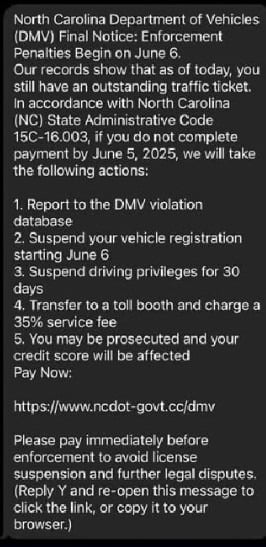
The scam text message is meticulously crafted to mimic official communications, employing a combination of urgency, false authority, and dire warnings. Here's a closer look at its typical structure and the psychological triggers it attempts to activate:
- Sender Impersonation: The message often purports to be from the "Texas State Department of Motor Vehicles (DMV)," an official-sounding but slightly off designation. Legitimate state agencies usually have very specific names (e.g., Texas Department of Motor Vehicles or Texas Department of Public Safety for driver's licenses).
- Urgent "Final Notice": Phrases like "Final Notice" and "Enforcement Penalties Begin on May 28" (or similar dates) are designed to create immediate anxiety and bypass critical thinking. This manufactured urgency is a hallmark of phishing attempts.
- The Bogus Legal Reference: The text explicitly states, "In accordance with Texas State Administrative Code 15C-16.003, if you do not complete payment by May 27, 2025, we will take the following actions..." This is perhaps the most cunning aspect of the scam. The inclusion of a seemingly legitimate code, complete with numbers and letters, gives the message a powerful veneer of authenticity. However, a quick check of official Texas administrative codes reveals that How to Spot the Texas DMV Text Scam Using Code 15C-16.003 confirms this specific citation simply does not exist.
- Threatening Consequences: The list of penalties is extensive and frightening:
- Report to the DMV violation database
- Suspend your vehicle registration starting May 27
- Suspend driving privileges for 30 days
- Transfer to a toll booth and charge a 35% service fee
- You may be prosecuted and your credit score will be affected
- The Malicious Link: The text provides a link such as
https://txdmv.gov-kljv.win/portal. At first glance, the inclusion of "txdmv.gov" might seem convincing, but the subsequent characters and the ".win" domain reveal its fraudulent nature. Official government websites invariably use the ".gov" top-level domain directly, without additional characters or alternative domains preceding it. - Pressure to "Pay Immediately": The closing statement, "Please pay immediately before enforcement to avoid license suspension and further legal disputes," reinforces the urgency and attempts to short-circuit any doubts the recipient might have.
- Unusual Reply Instructions: The prompt "(Reply Y and re-open this message to click the link, or copy it to your browser)" is not standard practice for official government communications.
The sophistication of this scam lies in its ability to mimic official language and processes, making it difficult for the average person to immediately identify it as fraudulent, especially when under pressure.
Why the Fake Texas Administrative Code 15C-16.003 Is So Effective
The inclusion of the fabricated Texas Administrative Code 15C-16.003 is a critical element in the scam's effectiveness. Here's why:
- Perceived Legitimacy: Most people are not intimately familiar with the intricacies of state administrative codes. A long, alphanumeric code instantly signals "official" and "legal" to the untrained eye, making the message appear credible.
- Induces Fear and Compliance: The mention of a specific code, even a fake one, suggests that the sender has legitimate authority and knowledge of legal procedures. This can intimidate recipients, making them more likely to comply with demands rather than questioning them.
- Discourages Verification: Scammers hope that the sense of urgency, combined with the official-sounding code, will deter victims from taking the time to verify the code's existence. They bank on the fact that most people won't pause to research a specific administrative code when faced with threats of license suspension and prosecution.
- Leverages Trust in Government: By impersonating the DMV, scammers exploit the general public's trust in government institutions. The reference to a specific administrative code reinforces this illusion of authority.
It's vital to remember that legitimate government entities, while they do operate under specific codes and statutes, will always provide clear, verifiable information through official channels, typically official mailed letters for serious infractions, or secure online portals accessible directly from their official .gov websites. They will never demand immediate payment via an unsolicited text message with a suspicious link.
Protecting Yourself: How to Identify and Respond to the Scam
Being vigilant and informed is your best defense against such scams. Here are practical steps and tips to identify and respond to the DMV traffic ticket text scam:
- Verify the Sender: Government agencies do not typically initiate contact for outstanding tickets or fines via text message, especially with links for immediate payment. Official communications regarding serious matters like license suspension or vehicle registration are almost always sent via postal mail.
- Examine the Link Carefully: Before clicking any link, hover over it (on a desktop) or long-press it (on mobile) to reveal the actual URL. Look for the ".gov" domain immediately after "txdmv" (e.g.,
txdmv.gov/pay). If there are extra words, numbers, or different top-level domains like ".win," ".com," ".org," etc., it's almost certainly a scam. For example,txdmv.gov-kljv.winis a red flag. - Research the Code: If you're ever presented with an administrative code, like Texas Administrative Code 15C-16.003, and you're unsure, take a moment to perform an independent web search. Use official government resources (like the Texas Secretary of State's website for administrative rules) to verify its existence. You'll quickly discover that codes like 15C-16.003 are entirely fabricated for this scam.
- Look for Red Flags in the Message Content:
- Excessive Urgency: Messages that demand immediate action or threaten severe consequences without opportunity for due process are suspicious.
- Grammar and Spelling Errors: While some sophisticated scams are error-free, many still contain subtle (or obvious) grammatical mistakes or typos.
- Generic Greetings: Legitimate notices will typically address you by name, not with a generic "Dear Sir/Madam" or simply as an anonymous recipient.
- Unusual Payment Methods: Scammers often request payment through unconventional methods like gift cards, cryptocurrency, or wire transfers, which are nearly impossible to trace. Official government payments are made through secure, established payment systems.
- Never Click or Reply: Do not click on any links, and do not reply to the text message. Engaging with the scammer, even by replying "STOP," confirms that your number is active and could lead to more unsolicited messages.
- Contact Official Sources Directly: If you genuinely believe you might have an outstanding ticket, do NOT use any contact information provided in the suspicious text. Instead, independently find the official website or phone number for the Texas Department of Motor Vehicles (DMV) or the local courthouse in question. Check your driving record and any outstanding citations through their verified portals.
- Report the Scam: Forward the scam text message to your mobile carrier (often by forwarding to 7726 - SPAM). You should also report the scam to the Federal Trade Commission (FTC) at reportfraud.ftc.gov and consider reporting it to the Texas Department of Public Safety or the Texas DMV directly. This helps authorities track these criminal activities and protect others.
The prevalence of this specific scam highlights the importance of digital literacy and skepticism. Always remember that government agencies will not threaten immediate suspension or legal action via text message and will never demand payment through unofficial links. Stay informed, stay cautious, and protect your identity and finances from these predatory schemes.