Unmasking the Texas DMV Text Scam: A Deep Dive into Code 15C-16.003 and How to Stay Safe
The digital age, while offering unparalleled convenience, has also become a fertile ground for sophisticated scams. Among the myriad threats, text message scams purporting to be from official government agencies are increasingly prevalent, preying on public trust and fear. One such particularly insidious scheme targets Texans, masquerading as a final notice from the Texas Department of Motor Vehicles (DMV) regarding an outstanding traffic ticket. What makes this scam deceptively effective is its clever use of official-sounding language, specifically referencing a fictitious rule:
Texas Administrative Code 15C-16.003. Understanding the mechanics of this scam and recognizing its red flags is paramount to protecting your personal information and finances.
This article will break down the common Texas DMV text scam, explain why the mention of
Texas Administrative Code 15C-16.003 should immediately raise suspicions, and provide you with actionable steps to identify, avoid, and report these fraudulent attempts. Our goal is to equip you with the knowledge to discern legitimate communications from deceptive ploys, ensuring you don't fall victim to these cunning fraudsters.
The Deceptive Lure: What the Texas DMV Text Scam Looks Like
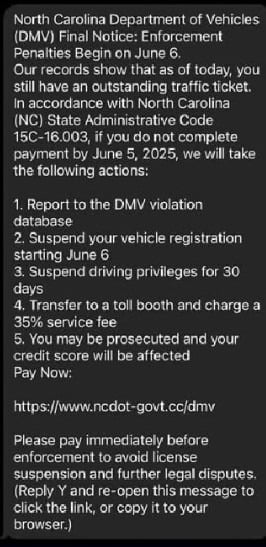
Imagine receiving a text message that appears to be from an official source, demanding immediate action for something as serious as a traffic violation. This is precisely the tactic employed by the Texas DMV text scam. The message is crafted to induce panic and urgency, pushing recipients to act without thinking critically.
A typical fraudulent text message often follows this template:
- Sender Appearance: It might originate from an unknown number or a spoofed number, attempting to mimic an official government entity.
- Opening Salutation: "Texas State Department of Motor Vehicles (DMV) Final Notice:" – This immediately establishes a false sense of authority and impending doom.
- Urgency and Deadlines: "Enforcement Penalties Begin on May 28." and "as of today, you still have an outstanding traffic ticket." These lines are designed to create immediate pressure. The inclusion of specific, near-future dates like "May 27, 2025," adds a veneer of authenticity while rushing the victim.
- The Fictitious Code: "In accordance with Texas State Administrative Code 15C-16.003, if you do not complete payment by May 27, 2025, we will take the following actions:" This is the linchpin of the scam's perceived legitimacy. The alphanumeric code sounds official and implies a legal backing that simply doesn't exist.
- Threatening Consequences: A bulleted list of severe penalties is used to heighten fear and coerce compliance:
- Report to the DMV violation database
- Suspend your vehicle registration starting May 27
- Suspend driving privileges for 30 days
- Transfer to a toll booth and charge a 35% service fee
- You may be prosecuted and your credit score will be affected
These threats are designed to be alarming and comprehensive, covering various aspects of a person's legal and financial life.
- Call to Action: "Pay Now: https://txdmv.gov-kljv.win/portal" – This is the ultimate goal of the scammer: to direct you to a fraudulent website where they can harvest your payment information or personal data.
- Final Warning: "Please pay immediately before enforcement to avoid license suspension and further legal disputes." and "Reply Y and re-open this message to click the link, or copy it to your browser." This reinforces the urgency and provides instructions to click the malicious link.
Recognizing this exact structure and specific phrases can be your first line of defense against falling prey to this elaborate deception.
The Fictitious Code: Why Texas Administrative Code 15C-16.003 is a Red Flag
The most ingenious, yet easily debunked, element of this scam is its invocation of
Texas Administrative Code 15C-16.003. Scammers understand that official-sounding references lend credibility, but a quick verification reveals the truth: this code does not exist within the official Texas Administrative Code. This is a critical insight for anyone evaluating the authenticity of such messages. For more in-depth information about this deceptive tactic, you might find
Texas Administrative Code 15C-16.003: A Fictitious Scam Tactic particularly helpful.
Legitimate administrative codes are publicly accessible and meticulously structured. They can be found on official state government websites, legal databases, or through direct inquiry with relevant state agencies. When presented with a specific code, especially one accompanied by urgent demands, taking a moment to perform a quick search is a simple yet powerful protective measure. If a search for "Texas Administrative Code 15C-16.003" yields no results on official government portals (which it won't), you've successfully identified a key indicator of a scam.
Scammers leverage human psychology: most people, upon seeing an official-looking code, assume its legitimacy without further investigation, particularly when under pressure. This false sense of authority is precisely what makes the scam work. It's crucial to remember that no legitimate government agency would cite a non-existent code to justify enforcement actions. Any communication demanding immediate payment and referencing a vague or un-verifiable legal code should immediately trigger your skepticism.
Dissecting the Scam's Anatomy: Beyond the Fake Code
While the fabricated
Texas Administrative Code 15C-16.003 is a major giveaway, several other elements within these scam texts serve as glaring red flags. A comprehensive understanding of these indicators can further fortify your defenses.
1. The Sender and Unsolicited Contact
Legitimate government agencies, including the Texas DMV, typically do not initiate contact regarding outstanding tickets or fines via unsolicited text messages. Official communications usually arrive via postal mail, ensuring a verifiable paper trail. While some agencies might use email for certain notifications if you've opted in, text messages for urgent payment demands are highly unusual. If you receive an unexpected text about a legal or financial matter, consider it suspicious.
2. Suspicious URLs and Phishing Attempts
The link provided in the scam text, such as `https://txdmv.gov-kljv.win/portal`, is a classic phishing attempt.
- Domain Mimicry: Notice how it begins with `txdmv.gov`, trying to trick you into believing it's the official Texas DMV website. However, the true domain is `.win`, meaning the link is hosted on a completely unrelated and malicious server. The real Texas DMV website is simply `txdmv.gov`. Always scrutinize URLs by looking at the *root* domain, not just what's at the beginning.
- Urgency to Click: Scammers push you to click immediately. Legitimate notifications will always direct you to an official, secure website that you can navigate to independently, rather than through a direct, unsolicited link.
Clicking such links can lead to websites designed to steal your personal information (phishing) or install malware on your device.
3. Threats and Urgency Overload
The aggressive and immediate threats outlined in the scam – license suspension, registration suspension, credit score impact, and prosecution – are designed to bypass rational thought. While official notices do carry consequences, they typically involve a series of communications, clear instructions for appeal or payment, and ample time for resolution, not instant enforcement via text. Government processes are designed with due process in mind, not instant punitive action via a text message. For a deeper dive into how these threats are used in these scams, read
DMV Traffic Ticket Text Scam: The Fake Texas Code 15C-16003.
4. Demands for Unusual Payment Methods
While this specific scam directs you to a fake payment portal, other variations of government-related scams might demand payment via gift cards, wire transfers, cryptocurrency, or other non-traceable methods. Legitimate government agencies will never ask for payment through these means. They accept secure, traditional payment methods directly through their official portals or designated payment centers.
Protecting Yourself: Practical Steps to Avoid Becoming a Victim
Staying safe from scams like the Texas DMV text scam requires vigilance and adherence to a few best practices.
- Verify Directly, Never Through the Link: If you receive a suspicious text claiming to be from the DMV or any government agency, do NOT click any links or reply. Instead, independently verify the claim.
- Visit the official Texas DMV website directly by typing `txdmv.gov` into your browser.
- Contact the Texas DMV by phone using a number you find on their official website, not one provided in the suspicious text.
- Check your official records for outstanding tickets or registration issues through legitimate government portals (e.g., your county's court website for traffic tickets).
This proactive verification step is your strongest defense.
- Guard Your Personal Information: Be extremely wary of any unsolicited communication asking for sensitive personal information such as your Social Security number, driver's license number, bank account details, or credit card numbers. Legitimate agencies will have secure methods for collecting such information, usually through authenticated logins on their official websites.
- Recognize and Report Phishing URLs: Always inspect the full URL of any link before clicking. Look for discrepancies, extra characters, or unusual domain extensions. If it doesn't end with a familiar, official government domain (`.gov` for federal, state-specific domains like `texas.gov` or agency-specific ones like `txdmv.gov`), treat it with extreme caution.
- Be Skeptical of Urgency and Threats: Scammers thrive on creating a sense of panic. Take a deep breath. Legitimate government processes allow for due process and reasonable timeframes. If a message threatens immediate, severe penalties, it's almost certainly a scam.
- Report the Scam: If you receive a scam text:
- Forward the text to 7726 (SPAM): This reports the message to your mobile carrier, helping them identify and block similar scam attempts.
- File a complaint with the Federal Communications Commission (FCC): The FCC tracks text message scams.
- Report to the Federal Trade Commission (FTC): The FTC collects information about scams to help with investigations and consumer protection.
- Contact the Texas Attorney General's Consumer Protection Division: Report scams that target Texans.
Reporting helps law enforcement track down these criminals and prevent others from falling victim.
Conclusion
The Texas DMV text scam, cleverly employing the fictitious
Texas Administrative Code 15C-16.003, is a stark reminder of the sophisticated tactics used by fraudsters today. By understanding the deceptive elements of these messages – from the fabricated code to the urgent threats and suspicious links – you can empower yourself to recognize and reject these attempts. Always prioritize independent verification through official channels over reacting to unsolicited messages. Your vigilance is the most effective tool in safeguarding your personal and financial security against these digital threats. Stay informed, stay skeptical, and protect yourself and your community by reporting these malicious scams.